
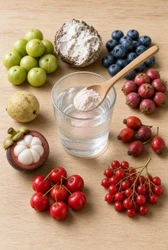
Nine Superfruits: The Brightest Fruits from the Hardest Places
Posted by The Sarvaa Team on 14th Aug 2026
A 30,000-foot view of some of the finest fruits we return to for resilience, brightness, and everyday nourishment.
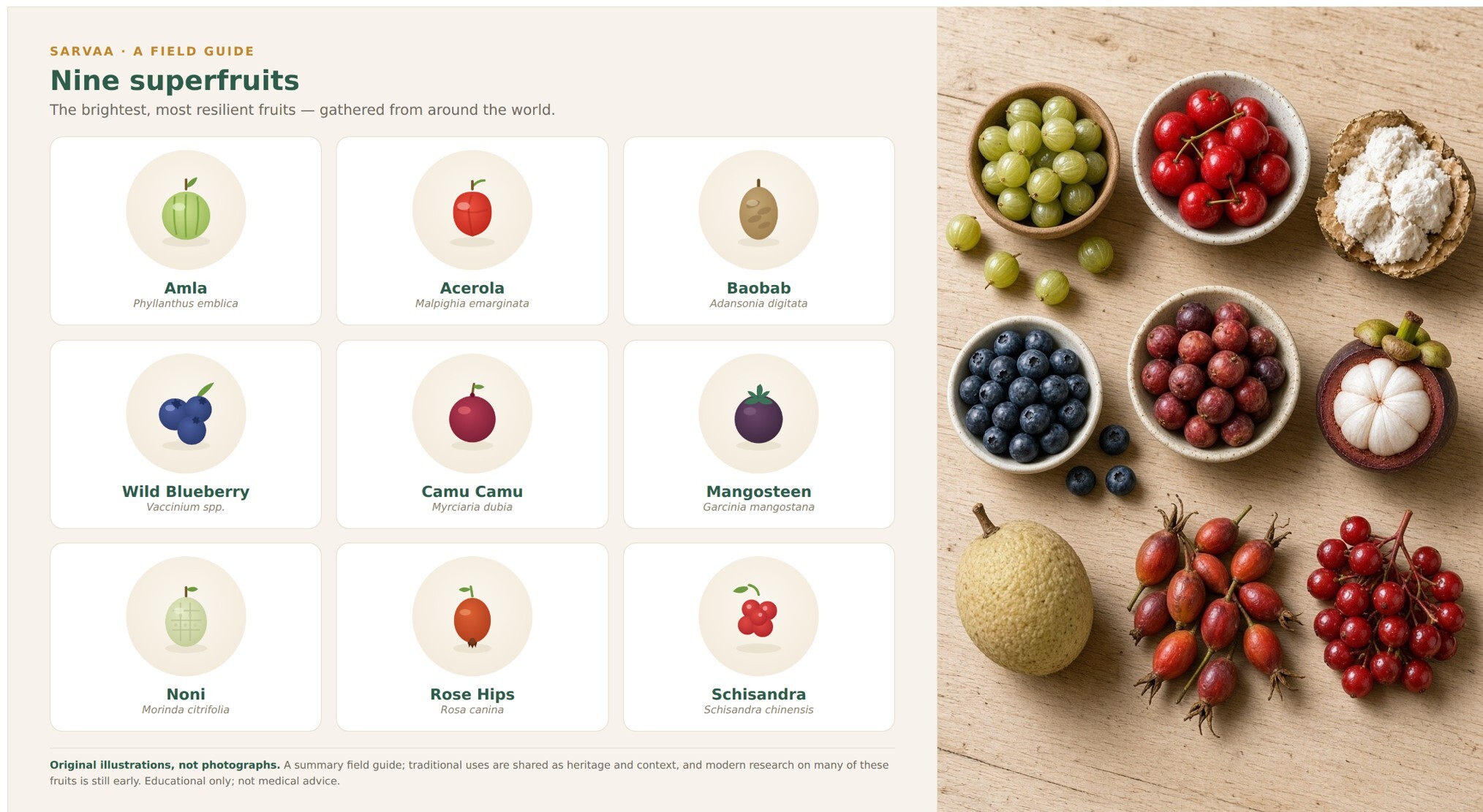
There is a particular quiet that lives inside certain fruits. Not the loud sweetness of a mango or the showy perfume of a ripe peach, but something older and more elemental; a density of color, a tartness that makes the mouth water, a history that stretches back centuries before the word “superfruit” was ever coined. These are the fruits that traditional systems kept close: the ones that grew where the soil was thin, the seasons harsh, or the distance from the next village long. They were medicine and food at the same time.
At Sarvaa, we have spent years seeking out the cleanest, most nutrient-dense expressions of these plants. Many of them live together in our SuperFruit C, a whole-food blend built around some of the planet’s most concentrated natural sources of vitamin C, polyphenols, and phytonutrients. This post is a high-level map of nine of them: what they are, the traditions that first valued them, and the modern research that has begun to investigate their benefits.
This is a summary, not a deep dive. For amla and camu camu we already have full essays at SuperFood Blog - Sarvaa Organics; the others will receive the same attention over time. For now, think of these as introductions; a way to remember that the brightest, most resilient foods often come from the hardest places.
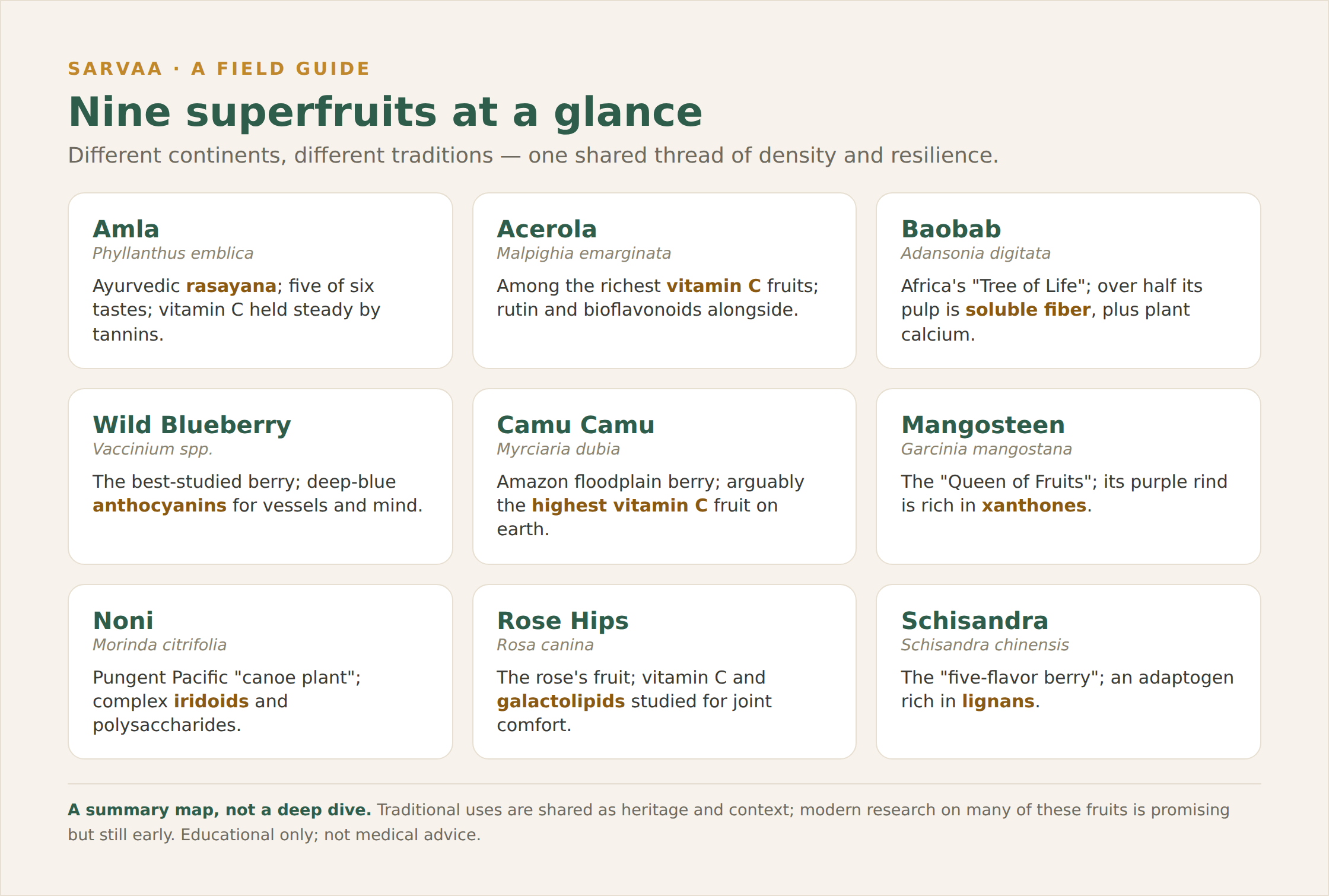
Amla Berry (Indian Gooseberry)
Amla (Phyllanthus emblica, also written Emblica officinalis) is a small, pale-green fruit that arrives with five of the six Ayurvedic tastes: sour, astringent, sweet, bitter, and pungent — and a cooling energy that has made it one of the most important rasayana (rejuvenative) foods in the tradition for more than two thousand years. The Sanskrit root amala means pure, clean, and shining; with the suffix ki, Amalaki becomes “that which makes you pure, clean, and shining.” The tree itself is honored in India, with its own devotional day, Amalaki Ekadashi, each spring.1
In Ayurveda it is prized for supporting digestion, liver function, immunity, and a healthy inflammatory response, and in naturopathic and herbal practice it is most often met as a gentle daily tonic — the principal fruit in the classic bowel-and-cleansing formula Triphala and the cornerstone of the restorative jam Chyawanprash. Nutritionally, its identity rests on vitamin C working alongside a dense field of polyphenols; intriguingly, amla’s own tannins appear to help protect that vitamin C from breaking down, which is part of why the whole fruit behaves so differently from an isolated nutrient.1 We have written a full essay on amla’s heritage, chemistry, and research: Amla Berry: A Gift of Renewal, Resilience, and Quiet Vitality. It remains one of the most important ingredients in our SuperFruit C blend.
Acerola Cherry
Acerola (Malpighia emarginata, also called the Barbados or West Indian cherry) is a small, bright-red, tart cherry native to the Yucatán and the subtropical regions of Central and South America. In Brazil, acerola juice has long held a place similar to orange juice in the United States; a daily, ordinary source of extraordinary nutrition.
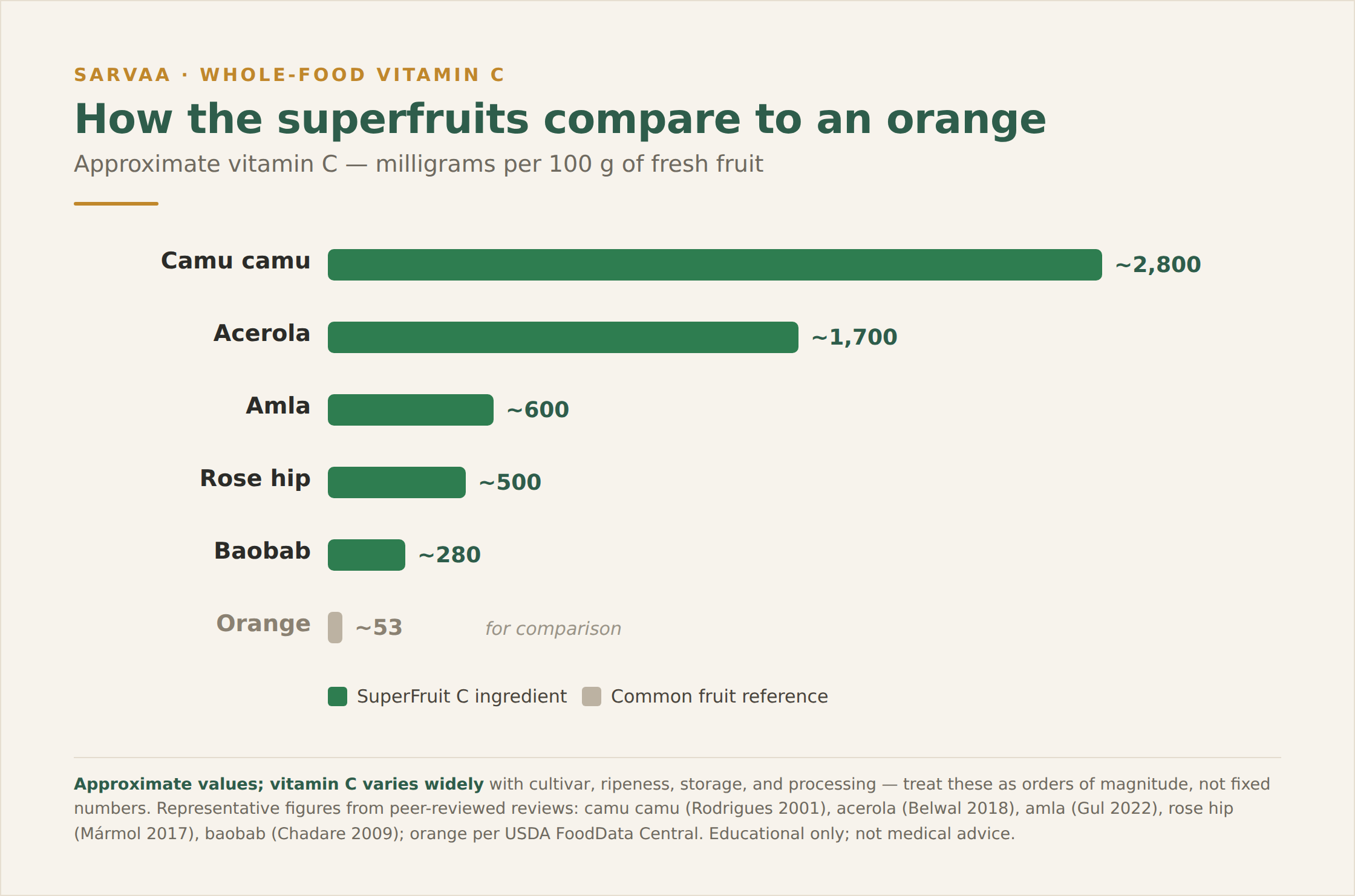
It is one of the richest natural sources of vitamin C on the planet: fresh fruit can carry anywhere from roughly 1,500 to over 4,000 mg of ascorbic acid per 100 g depending on cultivar and ripeness — orders of magnitude beyond citrus. The fruit also supplies bioflavonoids such as rutin, which in naturopathic practice is valued for supporting the small blood vessels and helping the body make use of vitamin C, along with carotenoids, anthocyanins, and a suite of B vitamins and minerals.2 One reason you almost always meet acerola as a powder, juice, or frozen pulp rather than fresh: the ripe fruit is so perishable that it begins shedding its vitamin C within days of picking, so it is typically processed at the source to lock in potency. Modern reviews highlight its antioxidant capacity and potential support for healthy inflammatory and metabolic responses; as with most superfruits the strongest human evidence is still early, but the nutrient density itself is undisputed.2 In our SuperFruit C, acerola is the first fruit listed; a deliberate choice for both potency and bioavailability.
Baobab Fruit
Pronounced “BEH-oh-bab,” the fruit of the African baobab tree (Adansonia digitata) arrives in a hard, coconut-like shell filled with dry, powdery pulp that tastes faintly of citrus and cream of tartar; a flavor that comes from natural tartaric and citric acids. In many parts of Africa the tree is called the “Tree of Life,” and folklore knows it as the “upside-down tree,” its bare branches looking like roots in the air. It is a fitting emblem: baobabs store water in their swollen trunks, can live for over a thousand years, and have fed and healed communities through long dry seasons for millennia. Remarkably, the fruit dries naturally on the branch, so the pulp is essentially a raw, whole food that needs no cooking or added processing.
More than half the weight of the dried pulp can be dietary fiber, much of it soluble. That fiber helps slow the release of sugars, feeds the beneficial bacteria of the gut in the way a naturopath would call “prebiotic,” and contributes to the fruit’s gentle effect on blood-sugar response — an effect measured directly in a human trial, where polyphenol-rich baobab reduced starch digestion and lowered the glycemic response to a meal.4 Baobab is also a rare plant source of calcium, and it supplies meaningful amounts of vitamin C, potassium, magnesium, and iron, with polyphenols that add antioxidant capacity.3 We include baobab in SuperFruit C for both its vitamin C contribution and the quiet, grounding quality of its fiber.
Wild Blueberry
Wild blueberries (Vaccinium species, especially the smaller, intensely colored wild lowbush types of Maine and Atlantic Canada) are among the most thoroughly studied berries in the modern literature. Their deep blue-purple color comes from anthocyanins; a family of polyphenols linked, in both observational and interventional work, to support vascular function, cognitive performance, and healthy inflammatory tone. Because wild berries are smaller, they carry more skin per bite, and the skin is where the anthocyanins live; wild fruit is typically higher in these pigments than cultivated highbush varieties, one reason we prefer wildcrafted fruit when possible.
Unlike many exotic superfruits, blueberries have a genuinely deep record of human clinical research. Moderate, regular intake has been associated with better cardiovascular markers, improved insulin sensitivity in some studies, and measurable effects on memory and executive function in older adults. A growing body of reviews continues to refine the picture, and the honest summary is an encouraging one: the benefits appear real, dose-dependent, and most consistent when the berries are eaten as whole food rather than isolated extracts.5 Wild blueberries appear in our SuperFruit C as part of the broader polyphenol matrix.
Camu Camu Berry
Camu camu (Myrciaria dubia) is a small, cranberry-like berry that grows along the seasonally flooded floodplains of the Amazon in Peru and Brazil, where it is often harvested by canoe when the rivers are high. It is, by most measurements, the highest natural source of vitamin C of any fruit on earth: fresh pulp can contain well over 2,000 mg of ascorbic acid per 100 g, with values above 5,000 mg reported under optimal conditions. A third of a teaspoon of high-quality powder can deliver several times the daily value.6
Beyond vitamin C, camu camu carries amino acids, bioflavonoids, and minerals including potassium, calcium, and iron. Traditional Amazonian use and modern interest both center on immune resilience, collagen support, and the fruit’s broad antioxidant capacity — and in naturopathic practice it is a favorite whole-food alternative to synthetic ascorbic acid. Peruvians have long dried the intensely tart berry for year-round use.6 We devoted an earlier essay to this remarkable fruit: Camu Camu Berry: A Remarkable Natural Source of Vitamin C and Plant Compounds. It remains a cornerstone of SuperFruit C.
Mangosteen
Mangosteen (Garcinia mangostana) is a tropical fruit of Southeast Asia — no relation to the mango — with a thick, deep-purple rind and soft white segments that taste like a cross between peach and mild citrus. So prized was it that it earned the nickname “the Queen of Fruits,” and a persistent (if unverified) legend holds that Queen Victoria offered a reward to anyone who could bring her one fresh. Tellingly, traditional medicine has long valued the rind, or pericarp, more than the sweet flesh: to support digestion, skin, and general resilience, often prepared as a decoction and used to support bowel and urinary comfort.
The fruit’s signature compounds are xanthones; a class of polyphenols (their name comes from the Greek xanthos, yellow) concentrated in that pericarp, with alpha- and gamma-mangostin the most studied. Laboratory and animal work has explored their antioxidant, anti-inflammatory, and cellular-protective properties, and comprehensive reviews map a wide range of bioactivities under investigation — while noting plainly that human data remain limited and that the poor bioavailability of xanthones is a real hurdle still to be worked out.7 We include mangosteen in SuperFruit C for the unique xanthone contribution it brings to the blend’s polyphenol spectrum.
Noni Fruit
Noni (Morinda citrifolia) grows on small trees throughout the tropical Pacific and beyond. The fruit is the size of a potato, green when unripe and pale yellow or white when ready, and its smell is famously pungent, earning it the affectionate nicknames “cheese fruit” and, less kindly, “vomit fruit.” That aroma never stopped it from being one of the most revered plants of Polynesia: it was a “canoe plant,” carried deliberately by voyagers across the Pacific, and a reliable famine food. Polynesian, Southeast Asian, and other Indigenous healers have used nearly every part of the plant for centuries — for pain, digestion, skin, infection, and general vitality.
Chemically, noni is a genuinely complex fruit: rich in iridoids, polysaccharides, and flavonoids, with a substantial complement of amino acids and soluble fiber. Modern research has examined its antioxidant capacity, immune-modulating effects, and potential support for healthy inflammatory tone, and reviews of its ethnomedicinal history emphasize both the breadth of traditional use and the need for continued rigorous study — much of the work so far is preclinical or early-stage clinical.8 Noni appears in our SuperFruit C as one of the more complex, multi-compound fruits in the formula.
Rose Hips
Rose hips are the small, bright-red fruits that remain after the rose petals fall; botanically the true fruit of the rose. They have a tart, almost cranberry-like flavor and have been used for food and medicine across Europe, Asia, and North America for centuries. Their most famous hour came during the Second World War: when Atlantic shipping made citrus scarce in Britain, the government organized volunteers to gather wild rose hips by the ton and turn them into a National Rose Hip Syrup handed out to children — a practical, nationwide recognition of their exceptional vitamin C content.
Beyond vitamin C, rose hips supply vitamins A, E, and B-complex compounds, iron, and a distinctive family of galactolipids and polyphenols.10 Those galactolipids are the reason rose hips have drawn unusual clinical attention for a fruit: a meta-analysis of three randomized controlled trials (287 patients) found that standardized rose-hip powder modestly reduced pain in osteoarthritis compared with placebo — with patients roughly twice as likely to respond — while the authors were careful to note the data were sparse and in need of larger confirmation.9 In the classic nutritional sense, the vitamin C and bioflavonoids also support collagen and immune function, which is much how herbalists and naturopaths have always used the fruit. Rose hips are a core vitamin-C fruit in our SuperFruit C blend.
Schisandra Berries
Schisandra (Schisandra chinensis) is a climbing vine native to northern China and parts of Russia. Its bright-red berries are famous in Chinese medicine as wu wei zi — the “five-flavor berry” — because they express all five classical tastes at once: salty, sweet, sour, pungent, and bitter. That completeness of flavor mirrors the traditional view of the plant as a tonic said to enter multiple organ systems, and hunters and foragers across its native range have long chewed the dried berries to fight fatigue on long journeys.
Schisandra is classified as an adaptogen — a plant thought to help the body maintain balance under stress — and its signature compounds are lignans (schisandrin, schisandrol, and related molecules). Traditional and modern interest converge on liver support, mental clarity, physical endurance, and healthy sleep; the berries are also astringent and have long been used in beauty and skin traditions. Contemporary reviews continue to explore how the lignans act on oxidative stress, inflammation, and liver-enzyme profiles, while acknowledging that rigorous clinical work outside traditional Chinese medical contexts is still limited.11 Schisandra appears in our SuperFruit C and in formulas oriented toward stress and recovery.
Bringing These Fruits Into Daily Life
None of these fruits needs to be taken in isolation. In traditional systems they were almost always combined with other plants, with warming spices, with the context of a whole meal or a whole season. That is why we formulated SuperFruit C as a synergistic whole-food blend rather than a single-fruit extract. Acerola, camu camu, rose hips, and amla supply layered, bioavailable vitamin C. Baobab adds fiber and minerals. Wild blueberry, mangosteen, noni, and schisandra contribute their distinct polyphenol and lignan signatures. The result is a powder that can be stirred into water, smoothies, or warm plant milks — a simple daily practice rather than a heroic dose.
As with the ashwagandha we wrote about last month, the real work of these plants is usually quiet and cumulative. They reward consistency more than intensity.
Key Takeaways
- These nine fruits come from different continents and different healing traditions, yet they share a common thread: exceptional density of vitamin C, polyphenols, fiber, or adaptogenic compounds.
- Amla and camu camu remain among the highest natural vitamin-C sources known; acerola and rose hips are close behind and bring additional bioflavonoids.
- Baobab stands out for its soluble fiber and plant-based calcium; wild blueberries for extensively studied anthocyanins; mangosteen for xanthones; noni for its complex traditional profile; schisandra for its five-flavor adaptogenic character.
- Modern research is encouraging but still early for many of these fruits — strongest for blueberries, growing for acerola, baobab, rose hips, and schisandra, and largely preclinical for mangosteen and noni. The honest reading treats the evidence as “promising and worth following,” not settled.
- Whole-food blends such as SuperFruit C let these plants work together the way traditional systems always preferred — in company rather than isolation.
A Quiet Kind of Brightness
We live in an age that loves the dramatic claim and the single heroic ingredient. These fruits suggest a different posture. They are not miracles. They are simply some of the densest, most resilient packages of plant intelligence the earth still grows — the ones that traditional peoples kept returning to because they helped them feel steadier, brighter, and more themselves through long seasons.
There is something quietly reassuring in that. The same roots and berries that carried communities through scarcity and stress are still available, still potent, and still willing to be part of an ordinary daily practice.
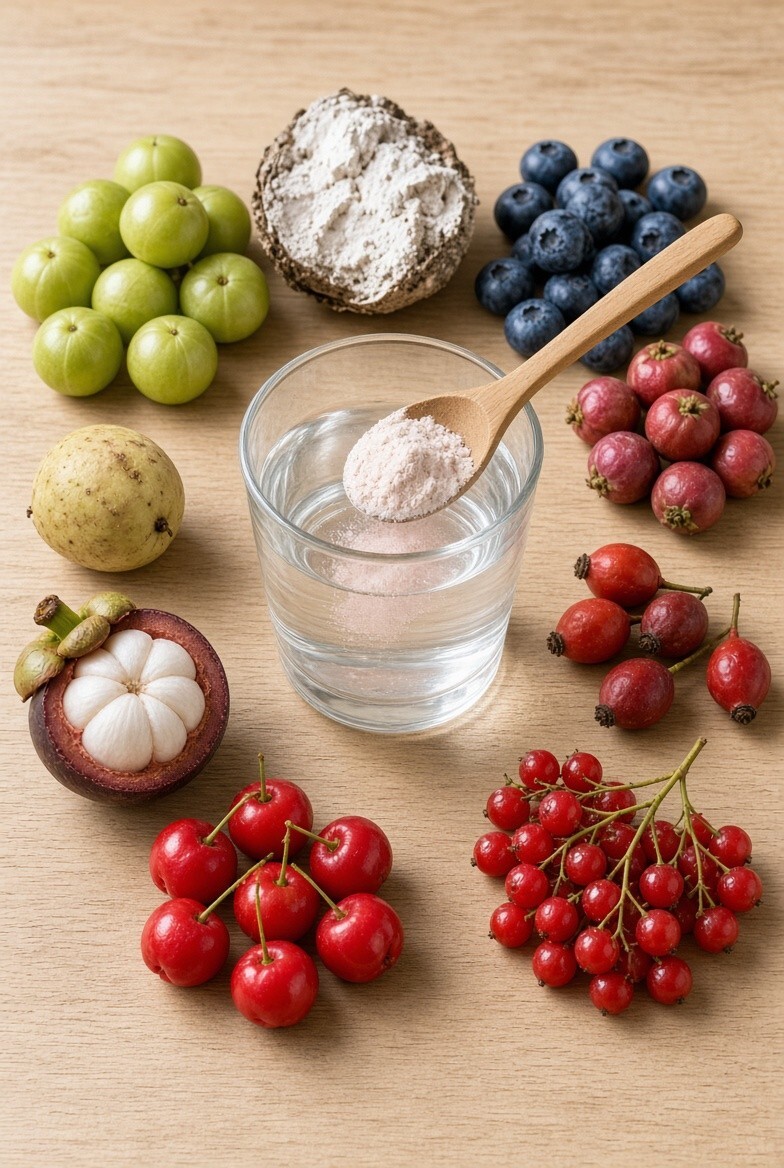
If you would like an easy way to bring several of them into your day at once, our SuperFruit C was formulated for exactly that purpose. And if any of these fruits sparked a deeper curiosity, reach out — we are always happy to talk about the plants we love.
Be Well,
Joshua and the Sarvaa Crew
Sources Cited
1 Gul, M., et al. (2022). “Functional and Nutraceutical Significance of Amla (Phyllanthus emblica L.): A Review.” Antioxidants 11 (5): 816. (Amla nutrition, polyphenols, and vitamin C.)
2 Belwal, T., et al. (2018). “Acerola, an untapped functional superfruit: a review on latest frontiers.” Journal of Food Science and Technology 55: 3373–3388. (Acerola vitamin C, bioflavonoids, and bioactivity.)
3 Chadare, F. J., et al. (2009). “Baobab Food Products: A Review on their Composition and Nutritional Value.” Critical Reviews in Food Science and Nutrition 49 (3): 254–274. (Baobab fiber, calcium, and micronutrients.)
4 Coe, S. A., et al. (2013). “The polyphenol-rich baobab fruit (Adansonia digitata L.) reduces starch digestion and glycemic response in humans.” Nutrition Research 33 (11): 888–896.
5 Kalt, W., et al. (2020). “Recent Research on the Health Benefits of Blueberries and Their Anthocyanins.” Advances in Nutrition 11 (2): 224–236.
6 Rodrigues, R. B., et al. (2001). “An Amazonian fruit with a high potential as a natural source of vitamin C: the camu-camu (Myrciaria dubia).” Fruits 56 (5): 345–354.
7 Gutiérrez-Orozco, F., & Failla, M. L. (2013). “Biological Activities and Bioavailability of Mangosteen Xanthones: A Critical Review of the Current Evidence.” Nutrients 5 (8): 3163–3183.
8 Almeida, É. S., et al. (2019). “Properties and Applications of Morinda citrifolia (Noni): A Review.” Comprehensive Reviews in Food Science and Food Safety 18 (4): 883–909.
9 Christensen, R., et al. (2008). “Does the hip powder of Rosa canina (rosehip) reduce pain in osteoarthritis patients? — a meta-analysis of randomized controlled trials.” Osteoarthritis and Cartilage 16 (9): 965–972.
10 Mármol, I., et al. (2017). “Therapeutic Applications of Rose Hips from Different Rosa Species.” International Journal of Molecular Sciences 18 (6): 1137. (Rose-hip vitamin C, galactolipids, and traditional use.)
11 Szopa, A., et al. (2021). “A comprehensive review of ethnopharmacology, phytochemistry, pharmacology, and pharmacokinetics of Schisandra chinensis (Turcz.) Baill. and Schisandra sphenanthera.” Journal of Ethnopharmacology 271: 113844.
Disclaimer: Insights are based on nutritional science, naturopathic principles, Ayurveda, Chinese herbal tradition, and traditional herbal practice. Ingredient benefits reflect historical use and modern research on nutritional composition. Educational use only. This information is not medical advice and is not intended to diagnose, treat, cure, or prevent any disease. Statements have not been evaluated by the FDA. If you are pregnant, nursing, taking medication, or have a medical condition, consult a knowledgeable healthcare professional before adding new botanical foods to your routine.