
Holy Basil’s Contribution to Peace of Mind, Body, and Spirit
Posted by The Sarvaa Team on 19th Jun 2026
When practicing mindfulness, we understand that oneness—the interconnection of all things—can be gleaned from meditating on the nature of a single leaf. In particular, the influence of the Tulsi basil leaf is wide-reaching across cultures, cuisines, and traditional medicines.
At Sarvaa, we love Tulsi for its deep-rooted tradition, stimulating flavor, and nourishing superfood benefits. We include Tulsi in most of our protein powders, SupraGreens, and Hormone Happiness blends to help support calm energy, balance, and daily resilience. When exploring its cultural and scientific significance, we find that the Tulsi leaf draws a line of awareness from body to mind to spirit.
What is Tulsi (Holy Basil)?
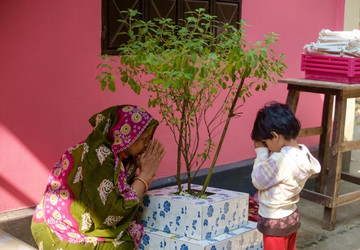
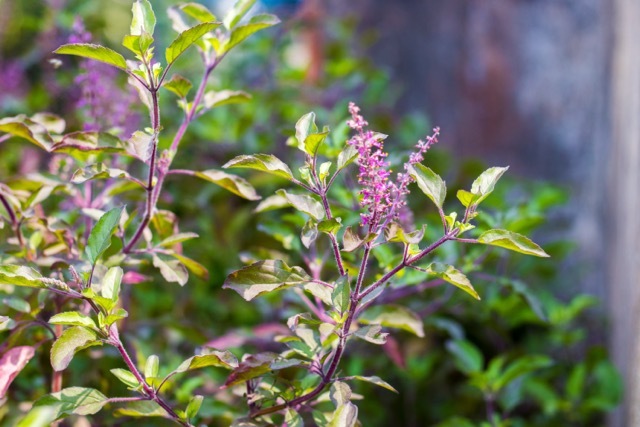
Tulsi (or holy basil) is a leafy, aromatic plant native to the Indian subcontinent and valued in cultures across the globe, including Thai, Greek, and Roman. Central to Hindu ceremony and prayer, the Tulsi tree is planted and worshiped daily outside homes and temples. It is named for the Goddess Tulasi otherwise known as Lakshmi. 1,2
It is versatile in its culinary applications, adding a distinctively pleasant flavor to dishes including stir-fries, pesto, soups, teas, desserts and more. The minty, peppery notes are warming and comforting yet strong and astringent, prompting one to breathe deeply and savor the moment.
From a nutritional standpoint, Tulsi contains vitamins A, C, and K, alongside calcium, iron, and zinc. Its profile of flavonoids features apigenin, luteolin, and kaempferol.3 In simple terms, this leafy green contributes beneficial plant compounds to a well-balanced diet.
Tulsi: The Divine Presence Among Us
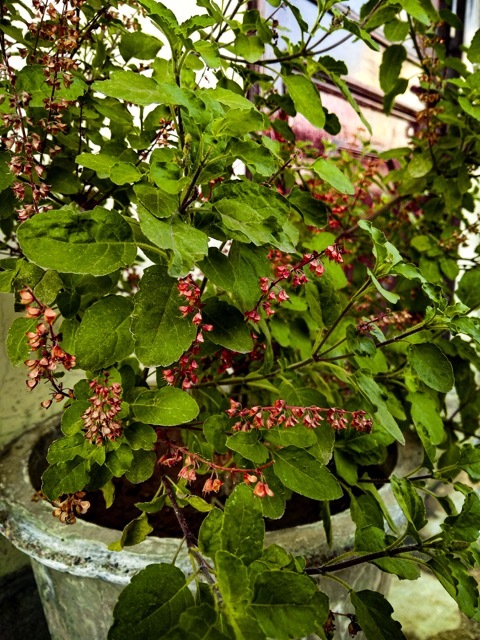
In one widely told story, before Tulsi existed in the form of a plant, she was known as Vrinda, the devoted wife of the asura king Jalandhara and a devout worshiper of Lord Vishnu. Despite Vrinda’s piety, the Lord Vishnu deceived Vrinda and slew her husband in a battle of cosmic stakes. Grief-stricken, Vrinda cursed Vishnu and immolated herself. From her ashes, the sacred Tulsi plant emerged. In reverence of her devotion, Vishnu blessed Tulsi as His beloved. 1,2
While Tulsi’s story varies across texts and traditions, it is ultimately a story of Bhakti—the loving and devotional relationship with the divine.
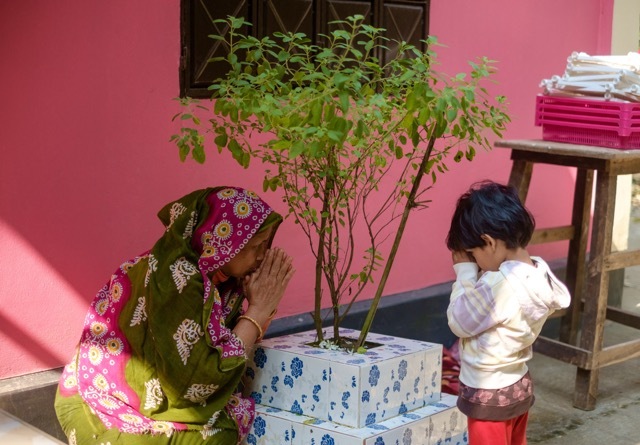
Today, many Hindu devotees worship Tulsi as a deity. They keep her watered, maintain the cleanliness of the space around her, and offer her leaves to Vishnu, which He values as a significant display of devotion. Through worship of her, Hindu devotees practice discipline and humility. She is a living, daily reminder of purity, love, faith, and mindfulness. 1,2
Tulsi As a Holy Medicine
Naturally, some of the spiritual connotations of Tulsi are present in Ayurveda, the ancient Indian medical practice. Within the tradition, the valued leaf is known as “the queen of herbs,” and has been used to treat a wide variety of maladies including respiratory disorders and digestion issues.
Notably, Ayurvedic practitioners identified the calming properties of the sacred herb, using it to enhance meditation and promote mental clarity. The tradition classifies Tulsi a “sattvic” herb, meaning it promotes spiritual growth, purity, and clarity of mind. Furthermore, Ayurveda classifies Tulsi as a “Medhya Rasayana,” a Sanskrit term roughly translating to cognitive rejuvenation. 3
Modern Explorations of the Ancient Herb
Through the lens of modern scientific research, emerging evidence supports some of the traditional uses of Tulsi—particularly its use as an adaptogen. While further research is needed to reach firm conclusions, these studies show promise.
A 2017 systematic review of 24 studies examining Tulsi’s therapeutic effect found it to be generally safe and identified potential across various health outcomes. Within this analysis, three studies reported significant reduction of anxiety and stress. 4
Since this systematic review, a 2022 study suggests that the supplemental use of Tulsi extract may improve measures of perceived stress and sleep quality. Findings of reduced cortisol levels potentially explain these effects. 5
Mindful Use of Tulsi
Remember that you possess a unique constitution, and we encourage you to take small, consistent steps that feel right for you when exploring the benefits of Tulsi. For a pleasant sensory experience, take Tulsi in the form of tea to appreciate its complex aroma and flavor. For consistency and ease of use, mix Sarvaa’s Hormone Happiness with oatmeal, yogurt, or smoothies. High-dose supplement capsules are available, but consult a healthcare professional if you are pregnant, taking medications (especially blood thinners), or have a medical condition.
You may find that a mindful meditation practice can help realize the full cognitive, physical, and spiritual benefits of Tulsi. When you introduce Tulsi to your daily routine, meditate on the nature of the holy basil plant.
Breathe deeply as Tulsi emits oxygen into the air. Notice that the qualities that have drawn so many cultures to Tulsi are the same that guide you to it today. Just as humans have cultivated this sacred plant for millennia, Tulsi, in turn cultivates within us a sense of calm, a vibrant body, and a spirit of devotion.

Don’t hesitate to reach out to us at care@sarvaaorganics.com for further guidance or to share your wellness journey. We’d love to hear from you.
Be Well,
Joshua and the Sarvaa Crew
Disclaimer: Insights are based on nutritional science, naturopathic principles, Ayurveda, and traditional herbal practice. Ingredient benefits reflect historical use and modern research on nutritional composition. Educational use only. This information is not medical advice and is not intended to diagnose, treat, cure, or prevent any disease. Statements have not been evaluated by the FDA.
Sources Cited
1 Bharathiyam. n.d. “Tulsi Worship – Procedure, Purpose, and Spiritual Significance in Sanatana Dharma.”
2 Hindutva Editorial. “Tulsi Vivah: Why and How Hindus Marry Tulsi Plant to Vishnu.” Hindutva. Published January 7, 2026. Updated March 17, 2026. https://hindutva.online/tulsi-vivah-why-and-how-hindus-marry-tulsi-plant-to-vishnu/.
3. Thakur, Ashish. (2023). 28. Holy Basil (Ocimum Sanctum)- A Comprehensive Review of Traditional Uses, Phytochemical Composition, Medicinal Properties and Future Directions. The Journal of Agricultural Education and Extension. 3. 136 - 151.
4 Jamshidi, Negar, and Marc Cohen. 2017. “The Clinical Efficacy and Safety of Tulsi in Humans: A Systematic Review of the Literature”. RMIT University.
5 Lopresti AL, Smith SJ, Metse AP, Drummond PD. A randomized, double-blind, placebo-controlled trial investigating the effects of an Ocimum tenuiflorum (Holy Basil) extract (HolixerTM) on stress, mood, and sleep in adults experiencing stress.